
Come back to visit as more nonsense & fun are added in the days & weeks to come.
In the meantime enjoy the first posts, some of many fanciful reading adventures soon to be seen on Blarney Bay.
Come back to visit as more nonsense & fun are added in the days & weeks to come.
In the meantime enjoy the first posts, some of many fanciful reading adventures soon to be seen on Blarney Bay.
The Sun of India
by M. L. Klein
The Sun of India, discovered in the mines of Jaipur, was the largest yellow diamond ever unearthed. It transcended the existing standard of perfection and would have no equal once cut. There it rested in the safe of the Empress Hotel on the island of Vancouver, en route to England and a team of giddy gemologists. The proud courier of this soon to be emblematic national treasure was an Indian diplomat and a household aide enlisted for security from his usual duties as Keeper of the Peacocks. It happened that in Victoria B.C. The Sun of India was at the most vulnerable point of its journey. Indeed, it was as if the very stars themselves conspired to thwart this pretended rival’s ascent.
Few yet knew of the important jewel’s existence much less its whereabouts. Certainly not one Duncan Derry, a dabbler in petty larcenies and waiter in the tea room of the hotel. As dumb luck will happen, the combination to the hotel safe was his for the simple taking one happy day.
It would get happier. He and Prahah Pahrump, a camp-follower of the great gem, found each other.
“Never in the life of any thief has an opportunity for riches been given such as this!”, Pahrump exclaimed to Duncan in a Calcuttan accent very close to intelligible.
Although something of dim bulb, according to his lights now, Duncan had not played the smart card in trading the safe’s combination for an unconsidered sum. The cash & carry transaction was revoked right there at the Tea Room table in a heated volley of words soon continued behind a potted palm when guests began pausing their forks half-way to mouth. While the sale was up in the air, the goods of barter were left tabletop in the very great distraction of their debate. Then, a prank of fate stepped in, or rather stumbled through, in the person of a busboy.
Everyone gasped, as guests in a hushed tea room do, at the terrific crash and clatter of a fallen busboy, now sprawled on the floor amidst the ruins of broken china, puddles of tea and the leavings of little cakes & buttered breads.
Everyone except Lady Thispwhistle, that is, who had already withdrawn her elegant walking stick from the precise spot the young man had lost his stride, shall we say.
It was only moments before that she had tilted a thoughtful look upward from her luncheon to consider what she may be enjoying. She ruminated how like canned pet food it appeared except for the perky parsley sprig. Indeed, Duncan’s present desertion of duties was the cause of more mix-ups than his own. Her chicken liver pate was wheeling its way to Room 840 where two lucky pugs awaited their master’s return but were just as excited to greet room service instead.
Her gaze had wandered towards a busboy and she watched idly as he made tidy the table of the excitable little guest now preoccupied elsewhere. She noticed how the boy grasped a linen napkin in a manner that implied contents and push it into his pocket. Were it not for his uneasy glances, Lady Thispwhistle would not have thought to take matters in hand. The ensuing chaos now about her was not unlike the current state of her manse and gardens under a siege of renovation and flat-footed workmen. Removing herself for a time to the comforts and quiet of the Empress Hotel, the grand old dowager of Victoria, British Columbia, seemed the sensible thing but there you are.
The busboy, understandably bewildered by his abrupt change of course and all the earnest questions regarding his welfare, was coaxed to stand but all he could manage for the moment was to sit upright on a broken platter of chocolate eclairs, as it happened, which did little to restore his sense orientation. Lady Thispwhistle leaned solicitously over him with other nearby patrons.
“Allow me to dab that knick on your chin”, she offered, which was not a knick at all but raspberry glaze. Withdrawing the linen napkin from the boy’s apron-pocket as a swab, a flurry of large bills fluttered forth.
Her Ladyship, drawing herself up to a stature acquired only by the well-corseted, awaited the approaching Maitre D’, somewhat detained by the exercise of his duty to conjure rectitude, perhaps over-zealously, by the snapping of fingers in all directions with such command that a few still seated gentlemen half-arose from their chairs before realizing the summons to action was not theirs to take.
The Maitre D’s pursed countenance puckered tighter still when presented the pinch. He took custody of the bundle. Her Ladyship made no comment but only arched a brow. The Maitre D’ arched both. Duncan Derry was not late in claiming the grand gratuity as his own. At the sight of the sure loot now up for anyone’s grab, he abandoned Pahrump’s reckless rummage for every last Ruppee tucked in his loin cloth. Duncan could no more restrain himself than a hungry raptor eyeing easy game. He swooped to the uproar across the room but his declaration was met with a silence that promised further questions. Any dim view of the matter was not shared by his fellow waiters swept into service as floor cleaners. Minds whirled to recall which patron may have been the source of such a dizzying windfall. Things were rather looking up. At the same time things were looking down for Pahrump. He had gone to his hands and knees looking for where the combination of the safe may have landed in the surprising turn of events. It was no where to be found nor his cash. His attention was diverted to Duncan and his dilemma. To challenge him might redeem his savings but to the everlasting loss of the combination.
So, Prahah introduced himself and his standing in the matter to the Maitre ‘D and made boast of how a wealthy American-Indian industrialist like himself could well afford any amount of largess to his waiter and more still.
The duo-citizenship was one too many careless fictions. His unraveled appearance did not support him and never mind the lack of a feathered head-dress.
The Maitre ‘D saw it was a matter for the proper authorities.
The busboy was assisted by two staff, one under each arm. It was not so much to help him onto his feet but to dispatch him to the street curb by the nearest undignified exit. Her Ladyship waved a heartfelt good riddance to him with the napkin. The heads of Prahah and Duncan swiveled in her direction. Their brows narrowed.
At the door of her hotel suite, Lady Thispwhistle realized, at the brief search for her room key, that she still had the culprit’s linen napkin in hand. It was only then she noticed a code-like scribble on it…a series of numbers, dashes and the letters R and L. She imagined it to do with schemes greater than those of a blundering busboy. Lady Thispwhistle’s gift was her infallible sense of portending events, flawed by a talent for getting their significance unerringly wrong.
Friar Guido, of the Benedictine Brothers of The Brandy Barrel & Spirits Winery had been attending a conference at the hotel hosted by The Vintners Association of Saskatchewan. He was tall, wide as any barrel in their cellars and had a devotion to brandy that exceedeth all understanding. There was no assigning blame to his height when he regularly knocked himself out cold on the low archways of the abbey. There was general, if charitable, consensus amongst his confreres that Friar Guido may have mistaken his vocation for another calling.
Prahah Pahrump had the same impression when he first met Friar Guido late that afternoon in the hotel’s Bengal Lounge. It was there they ordered the same bar specialty called ‘For King & For Country’. The custom was to shout “CHARGE!” before downing the empire-sized elixir in one swallow. The two allied as one that their drinks ought be put on a tab. Friar Guido was more not himself than usual, being usually not himself quite a bit. In fact, he was becoming confused about where he was and why he was and practically jumped at the suggestion by Pahrump that they go tiger hunting. What his little friend really had in mind for the evening was, while less illegal, every bit as sinister.
A knock on Lady Thispwhistle’s door startled her although she could not think quite why. She went to see who it might be. There stood the small-fry Indian with a plump friar on the side. A slight sulfuric wafting, as if from a recently fired hand-gun, lingered in the doorway although explanations less improbable occurred to her.
Thinking how very real they both appeared, she hazarded an inquiry; “You’re nothing I’ve conjured as a consequence of the questionable quality of cuisine here, now are you?”
The friar’s attempt to focus on the meaning of this question only resulted in his eyes rolling about in odd directions. Abandoning the search for clarity, he withdrew a revolver out of the folds of his monk’s sleeve. Lady Thispwhistle would have, under more civil circumstances, advised him that his firearm was pointed backwards.
The little Indian, turbaned so tightly his eyes seemed closer together than they already were and with a beard so outstanding it preceded him by a foot, said in a sweet sing-song cadence, “ Please to oblige our insistence that lady step back or it shall be necessary to use harmful bullet gun against her.”
A piercing scream shattered the air after this conversation-stopping remark. It came from down the hall and was the kind of protracted, high pitch scream, followed by hysterical shrieks for help that immediately suggested to everyone within earshot that blood was involved.
The friar and the Indian scrambled away like frightened vermin in the opposite direction and disappeared down a stairway exit, clearly marked DO NOT ENTER and FIRE DOOR EXIT. The fire-alarms, triggered by their hasty retreat and deplorable disregard of posted warnings, brought hotel guests to their doors, carrying half closed luggage and in various states of undress.
Lady Thispwhistle impatiently and repeatedly clicked the receiver of her room phone. When the concierge at last answered it was only to hear him announce that there exists no fire and to assure the prompt restoration of order and tranquility that no guest found convincing when being directed to evacuate in the next breath. All this was shouted expansively, over the din of the alarms, as if addressing many people at once, which was actually the case.
“I say, it’s Lady Thispwhistle here and there’s a spot of trouble on the eighth floor. I believe someone’s been hurt and there are scoundrels about. Do send help.” The concierge’s utter state of distraction was evident by his response to this news. “Your kind attention ladies and gentlemen! Will the owner of two Chinese Pug dogs please report to the front desk?”
Just then she could hear sirens approach, quite enough to end the conversation about pets at large in the lobby. She swifted down the hall to the source of the distress call where others of her floor had gathered, aghast at the scene that lay before them. It was Duncan Derry, tea room waiter, slumped in a pool of his own Bloody Marys. The cause of his gastric upset and piteous condition had little to do with a brandished revolver recently discharged in his direction. It had a lot to do with the contest he held with himself to see who could drink the most, a practice not unknown to profit-minded pubs and why bar stools invariably face mirrored walls.
He had collapsed half-way out of the elevator. That the doors kept opening and closing on him did little to assure the on-lookers that he was still alive. Suddenly, the lights went out. It could be rightfully concluded that repairmen, in their ambition to shut off the riotous clanging of fire alarms, shut off the electricity in the bargain.
Audible now were the groans of the victim who was less dead than relieved that the maniacal attack on his ribcage had stopped. Treading through the darkness to the spot where the waiter lay, several gentlemen guests assisted him to a nearby settee. All but unnoticed was the slight metallic clink of a falling object as they did so. Lady Thispwhistle stepped cannily towards the source of that sound and recovered a maid’s key dropped from the waiter’s hand. In the faint light of the hall window, she saw that the room number on the key was her own. She was beginning to get ideas.
Fire engines and an emergency vehicle were wheeling in, their wailing sirens having peaked and pitched upon arrival. It was just a matter of minutes before a team of medics would have the waiter chap atop a stretcher, on his way and, quite honestly, off their hands…or so they thought.
What no one on the eighth floor could have known was that the ambulance had been called for the corpulent and now unconscious friar. Moreover, no police had been summoned at all.
He was found splayed flat at the bottom of the first floor stairwell. Pahrump and Friar Guido had just passed the landing of the fifth floor the moment the lights went out. At that particular split-second Friar Guido was mid-air in a flying leap to navigate a two bound descent to the fourth floor. This was the point people in the lobby were aware of his approach but naturally mistook it for some other calamity befalling the building such as a piano crashing downward through several ceilings.
Pahrump had scurried onward to subterranean regions of the building in a neat escape and wondering if his quest to acquire The Sun of India would come to naught. He was not a man of unlimited resources, nor ideas for that matter, so the welder’s torch he stumbled over, there in the basement, seemed as if fortune was smiling on him again.
It was freezing down there. Pahrump could see tiny, high windows glazed over with ice when the lights flickered back on. He found what comfort he could in a laundry bin. When an avalanche of bed linens collapsed from a shaft directly overhead, he was content to stay as he lay, warm at last, and undercover to say the least. Twice more he heard the whine of more sirens approach. He daren’t take action too soon although time was running out. The Sun of India would be moving East in the morning.
It was quite the middle of the night when Pahrump felt safe to slither out of the wickered bin and, with the stealth of a cobra after prey, make his way to the purser’s office where the hotel safe stood solitary vigil over the Sun of India. There was no guard because Pahrump himself, Keeper of the Peacocks and trusted aide-de-camp, was that very person.
He went right to work on the safe. The welder’s torch fired great sparkling flames and did the job it was designed to do; it welded the safe’s lock into a single molten blob of metal.
Taxed beyond endurance, Pahrump let loose with one last huge and futile blast of the torch. This accomplished two things. It set his beard on fire and triggered the hotel’s sprinkler system. This again, accomplished two things as if some inscrutable design was at work. His beard was extinguished and the sudden icy water on the molten-hot safe spontaneously cracked open its door.
At a loss to express near-hysterical joy, all he could cry out was, “Oh, Jiminy!, Oh, Jiminy!”, as he beheld the great golden Sun of India. Even the violated safe’s rattling alarm gladdened the moment like the flourish of triumphant (if tinny) trumpets, so great was his glee. Clutching it to his breast he all but danced out the door.
In the lobby, chaos had returned and, for that matter, the pug dogs. Dour-faced and scarily-silent guests under umbrellas were massing like storm clouds. Fire trucks were on their way, yet again. The concierge, in a dripping wet bathrobe sporting playful pussycats, flipped frantically through a manual titled, Management Handbook For All Occasions. One of the many occasions it did not cover was a tireless repairman paging his assistant overhead…“Hank, where are ya? Report to the lobby, pronto. We gotta a safe door hangin’ by a hinge”.
The Indian diplomat lost consciousness at this announcement.
Moments later the sprinkler system was turned off but at the sacrifice, again, of the building’s electricity.
Pahrump could hardly believe his good luck. Making an escape through the crowds in the darkened lobby was a sure bet, that is, until he bumped straight into Lady Thispwhistle. Hitting a high note that would startle a soprano, she shrieked, “STOP THIEF!”…two words seldom known to produce sudden reform in thieves. Escape to the outside he did, flying right into the path of another obstacle, though less formidable than a screaming woman, the on-coming fire brigade. Behind him was a posse of guests waving wildly at the trucks and gesturing to the little man, darting about in confusion as to which way to run. The firemen, understandably, concluded it had something to due with his badly singed beard and blackened turban. A quick-thinker saw to calling the police.
There was but one escape route, Pahrump decided. It was up a sheer hillside road that no vehicle was likely to negotiate over sheet ice.
And up that steep hill he did go…several times over. It was at the bottom of the hill police watched Pahrump attempt his icy ascent to the summit. Handicapped by his grip on the great yellow diamond, each time he scaled the near heights of the hill, it was only to slide half way down again upon its slippery slope. Undaunted, he continued to repeat this struggle upwards over and over again, without success. Pahrump understood the much improved chances of escape if he just let go of the weighty gem. He chose not to.
The police watched in dumb amazement at his dogged tenacity in the face of certain failure. And, since there was no reason to think this was going to be over very quickly, someone sent out for hot coffee and breakfast pastry. As to make good use of idle time in the line of duty, the law officers busied themselves with booking bets as to the the exact date & time of their fugitive’s final descent. Never have so many owed so much to so few when Pahrump finally surrendered to the hill. He slid down, without resistance, like a dead otter. It was with a frozen tear, he relinquished his treasure and his liberty to the British Columbia Police.
Lady Thispwhistle, a material witness and possessor of evidence in the day’s skullduggery, wearied detectives at length with conspiracy theories that involved, among other innocent parties, the two Chinese Pug dogs.
Friar Guido, after his release from the hospital, was sentenced to a stay at a sanatorium for the criminally inane due to his barrister’s plea of acute asininity. It was a newly coined mental disorder but the judge bought it. Upon return to his legal custodians at the abbey, he was bound under obedience to a life of reparation and self-sacrifice. Not a drop more than a keg of lager a day was permitted him.
Duncan Derry, was never indicted for anything. After recovering from delayed medical attention to make right what was left of his ribs, he moved to Las Vegas, NV which promised more opportunity and less mounted police than Victoria B.C. There he found gainful employment as an operator of a roulette table. His uncanny skills with its machinations pleased the hotel management to no end and they were not ungrateful.
As for Prahah Pahrump, what he lost in life was found in legend. Never was a Calcutta inmate so revered as he. For what prisoner could boast that he once held captive the untouchable Sun of India?
———————————————————————————————
Fowl Play
The Adventures of Dirk Demiwitt, Private Eye
by M. L. Klein
It was a night like every other night in Los Angeles…dull & gray under streetlights that pointed their jaundiced fingers every way except home….a night as dull & gray as my crumpled trench coat with the bullet holes from all them gumshoe jobs gone wrong. I shoulda went home. But, like every night in Los Angeles, I found myself at Sarge’s Diner waiting for Lucille. Lucille. The dame that got away. Sure, she might come back like she said. And the Yanks might take the series this year. It was almost midnight. I was staring at my last cup of Joe wishing Sarge’s Saturday Night Special and that chunk of banana cream pie was just a crazy dream. But something else stopped me from getting up & walking out the door. There was a buzz in my brain and it wasn’t the static from the old man’s radio telling us the Red Sox lost in the sixth with the bases loaded. It was the buzz of the street. Something big was coming my way. All I had to do was wait and it would find me.Then, the phone rang, the one in the booth in the back with Lucille’s number on the wall. It shattered the air like a machine-gun shot off by some scum-bag punks that don’t knows their worthless lives is gonna end on the wrong side of a gun barrel, especiallys if I tip off Big Eddie that theys been skimming cream off his take of the action. I answered the phone. It was Midge. Midge always knows where to find me. She always knows how to get to me, too. She’s nuts about me and I’d marry the dame but then I’d have to find another secretary who works for nothing. Hi, doll face, I says…trouble changing my flat?
She wasn’t listening. Her words sounded jumbled like the coins I fiddled in my pocket.
“Trouble over on Mariposa del Dolorosa east of Torregosa. Better hurry up and now. The police are already there”. Detective Polawski was there, alright, the big dumb flatfoot. He tries to get tough with me for crossing the yellow tape, yeah, tries to put the squeeze on me with that trouble I had downtown but he knew I had my rights being there. It was always the same. Decent home, sweet old lady and the Kid. I’d seen it more times than the bottom of an empty beer bottle. Good home, bad kitty. He was babbling, making no sense but he was smart, see, and knew all the angles. Behind that baby-face mug was a hip cat. The feathers was from a pillow fight, he says, seeings how they was just playing around, hims and the bird, and he don’t knows what happened after that.
But, I do…that’s one canary who won’t be singing at no trial. Polawkski was wise, too. We’d never find the body. It was gone permanent like last week’s Chili-Dog at Sarge’s. Case closed. I walked my way home.
It was 3am and drizzle dripped down my face like the tears no one was crying for that bird.
The neon sign blinking “Eats” outside my walk-up made my stomach turn.
I went to the kitchen & got out my old friend, Hershey’s Chocolate Syrup.
I drank straight from the bottle…to all the tweetie-birds who showed up missing.
Dirk Demiwitt, Private Eye
——————————————————————————————
The Uninvited Guest
by M. L. Klein
This is the story of a wayward opossum’s venture into the world of domestic life. Looking back, I fancy the decision to invite herself into my household was inspired by some occasion of culinary cachet that required parted doorways for smoke dispersion. One pork roast, wreathed with scorched rosemary and tiny blackened vegetables comes to mind. Whatever the cause, the little creature never questioned the hospitality of strangers. At the same time, she was quite artful in avoiding, for a goodly length, the subject of over-staying her supposed welcome.
I became aware her presence late one evening as I blinked towards the source of an unfamiliar sound near a dim nightlight. There I saw “Opal”, the opossum. It was soon discovered Opal had discreetly taken up sleeping quarters beneath the couch during the day and would waddle with soft, silent paws to the kitty bowls at night.
Opal waited keenly, every night, for lights to be turned off and the sure sounds of my going to bed and, wasting not a minute afterwards, padded off to the generous leavings of a picky Puss’ supper plate. It wasn’t long before Opal happened across certain conveniences such as an open box of clay particles in the bathroom.
After night rounds, Opal returned, directly, to underneath the couch. Some rag-rugs stashed there were the objects of much scratching, fluffing and making right as one would with a lumpy pillow. But, as all wise animals know, exertions on full tummies ought to be limited ones or avoided altogether. I would hear, at last, a weary flop and a sigh upon the collapse of efforts to become perfectly comfortable.
While it did not occur to Opal that her extended stay could pose a possible inconvenience, there were compensatory etiquettes such as a certain tidiness about her person, not prying into the private affairs of her hostess and snoring only lightly and on rare occasions, at that. After a time, Opal became confident that she was in the best of all opossum worlds or of house-guests, for that matter; at liberty with the larder and politely left to one’s own amusements. It came to her sitting in the big kitchen window by the potted ivy, alone with her thoughts, in hours of broad daylight.
What would the neighbors think? Would she be mistaken, understandably, for a monstrous rat or a wretchedly misbegotten cat?
I could imagine the inquiries and, no less, the injurious remarks.
One bright Saturday morning, Opal was lured into a kitty carrier by the promise of Prince Olaf Sardines positively glistening with oily goodness and quite the sumptuous treat. It was with fleeting regret on my part and no little resistance from Opal that the uninvited guest was returned to the garden life but not left entirely, I must confess, to her own resources.
Revisiting By-Gone Films
(and topics practically related)
Titanic 1943/German mit English Sub-titles
by M. L. Klein
This early version of the great sea disaster has been touted in certain circles as the best movie ever filmed on the subject. This is not true, at all. Most of the film we are wearied by German revisionism which portrays the English voyagers as cads and fools and finally victims of their own wretched excess. That is, except for heroic ship officer ‘Petersen’ who knew, practically from the start, that the White Star Line’s greatest vessel was doomed to hit an iceberg as a direct result of British ambitions in the Atlantic and their fiendish design to cross the ocean and then go back again. Such audacity paled German ambitions on land.
It’s fascinating how little difference there is between everyday German conversation and the gusto employed by this film’s condemnation of the British. There’s something about the bluster of the Germanic language, whatever the subject may be, that positions the listener as adversary.
This is true of Japanese bluster, too, and is the reason they were the bad guys in WWII. The film was rolling nicely & so was the boat when director Herbert Selpin was marched off by the Gestapo during production and brought before Goebbels to explain his objections to certain badly-behaved naval consultants on the set who consulted much less than they molested female cast members, mainly young Jewish girls on a lark from their internment camps as extras. Selpin made the mistake of thinking Goebbels was wanting of candid reports about the problems and voiced his opinions freely. It didn’t help matters that Goebbels did not much care for the tone of Selpin’s script. Selpin was found completely dead in a jail cell the next morning. In spite of hasty rewrites by the next director, who we can guess had difficulty holding pen steady to paper, the movie was banned by German censors for its scenes of panic and terror. It is a little known fact that panic and terror was not allowed during the Third Reich. It was preferred everyone remain calm while the Fatherland smashed Europe to smithereens for the second time, some twenty years after smashing it to smithereens the first time. But, the Germans are nothing if not practical, so the four million Reichmark film was not let go to waste after due thought; the consensus being it was the duty of the Nazi party to let Germany and, indeed, the world know what vicious gutter rats the English really were. At the end titles the film-makers captioned the following parting shot across the bow:
“The Deaths of 1,500 people remain unatoned; an eternal condemnation of England’s quest for profit”.
It is a small and strange solace to think that those who did not survive the RMS Titanic were, at least, spared this film.
———————————————————————————————
THE YOUNG LIONS – 1958
by M.L. Klein
The Young Lions should not be viewed because you heard it was a great wartime drama based on a great wartime novel.
Watch it, if you must, because the film does have some merits as a wartime farce.
Take the scene where German officer Brando first meets Mai Britt, the wife of his commander.
It seems there was some worry that her role as a worthless tramp might escape the audience.
Measures were taken. From the moment Britt slinks to answer her doorbell in seductress drag there is no mistaking her intentions towards Brando who, clearly, will not long be a complete stranger to her.
We know this by her sly pussycat expression & the way she all but locks the door behind him & slips the key down her plunging decolletage.
Poor Brando. The chances of his honor surviving intact are about the same chances a lame antelope has with a lion on it’s back. This does not square with his role as Germany‘s Conscience.
Well, onward and downward.
We wince through back-to-back violence; the wholesale massacre of a garrison of Americans in North Africa…
then to the wholesale savaging of Montgomery Clift by his fellow soldiers.
A little change of pace is called for and it comes as unintended humor in a scene with Brando & Schell bouncing across the Tunisian desert on a single motorcycle making their escape from British forces. They’ve just gotten away with their lives & not much else except their shared scooter. Brando, driving, is desperate for sleep. He struggles to keep his eyes open & head from dropping but he resembles a goofy drunk in the process. Schell, full of vim & brimming with vigor, gesticulates wildly from the back seat that Brando “MUST STAY AVAKE! Ve haft only 400 kilometers to go! Das ist only 7 more hours!” Well, Schell’s optimism is dashed all to pieces and so is he. They crash. Perhaps this was not a bad thing. It spared him realizing that the scooter was going to, unexpectedly, need more petro. We can safely assume it also spared Brando from carrying Schell piggyback the rest of the way.
Brando, safely back in Berlin (somehow), visits his badly injured commander, Schell, in the hospital. The camera prepares us for something dreadful. It is…dreadfully funny.
Schell swathed mummy-like in a full-head bandage, bears a passing resemblance to a sore thumb. Little hole, though, for a straw.
Then, there is some serious business about Schell demanding delivery of a bayonet so he can kill his room-mate but no one is surprised when he kills himself instead, having learned Britt thinks it BEST that her disfigured husband does not come home being, perhaps, BETTER that he spend the rest of his life in a veterans hospital. It could be argued that this movie is entertaining however unintentionally.
———————————————————————————————–
It remained to rummage the documentary section which can be accidentally entertaining. At the same time, documentaries can impose information you just might prefer to go to your grave not knowing. On the plus side, they do not require returning until seven whole days later. This helps avoid showing up tardy and the business of explaining oneself to the librarian’s full dissatisfaction. With selection settled, off I bounced in my jalopy whose back-fires are not only a means of propulsion but serve as an annoyance to librarians. Beside me sat a documentary on the entire Cinerama-Vision history of MGM as explained to us by that Patrick-Commander-of-the-Star-Fleet fellow in two lengthy discs.
Early on we learn about Irving Thalberg, poor kid, who didn’t have long in this world. He was big-game in the bachelor dept. and was bagged by the manically ambitious Norma Shearer to whom I took an instant dislike. She may have been slightly cock-eyed but nothing escaped her cross-hairs.
Although Louis B. Mayer & Thalberg were a charmed team there was increasing tension & unfriendly competition as time wore on. Thalberg was squeezed out of power and then up & died not of a heart attack as expected but of pneumonia which surprised everyone . Among Thalberg’s last words on his first death-bed, not long before his last death-bed, were, “They knifed me”.
Dory Schary came on board and just ruined everything by keeping up with modern times and, worse yet, being a success at it. Mayer & Schary careened towards a crisis. Schary promoted films of which Mayer did not approve; he was an avowed prig who would “never make a movie he wouldn’t take his daughters to see”. Well, good for him, I say. I’m an avowed prig, too. But, Schary’s insistence on movies with gritty messages and endings insufficiently happy was the old man’s undoing. In a fit of pique, Mayer put in a call to Mr. Skenck, the real power behind MGM, upstairs in New York. In a terrible miscalculation, Mayer delivered an ultimatum. It was Schary or himself. Mayer was, shockingly, fired. That he could be fired at all was even more shocking. The very same day, before Mayer could leave for home, his fancy company car was made to disappear. Skenck never really liked the guy and felt free, now, to express contempt for the man who built his empire.
Then one by one, to the last, every grand old MGM star was fired. But, life went on and MGM had its share of successes including the last great epic of all time, Ben-Hur. Eventually, the big money-makers dwindled and Schary was fired. Then, his replacement was fired, Then, the replacement’s replacement was fired and so on. In the meantime Mayer died. His actual last words were, “Nothing matters…nothing matters”. This was a disturbing statement from a man whose body of work influenced millions of people to the good. Also, in the meantime, the federal government, having nothing better to do, decreed that MGM’s ownership of all those many Loew’s Theatres constituted a monopoly which dealt MGM’s business paradigm a death blow. Television danced on it’s grave. In time, a Kirk Kerkorian bought the studio, seemingly just to louse it up. In short order, he bull-dozed the entire 65 acres of back-lot which housed every well-kept set of about every movie MGM ever made. Nowadays, some effort would be pressed to preserve it as an historical site & a money-making one at that. Kerkorian sold it all to a big housing development project where, to this day, nobody sings in the rain. Millions of invaluable MGM artifacts, props, wardrobe, you name it, were sold at auction. Irving Thalberg’s name was removed from the Irving Thalberg Building. It’s easy to imagine the likes of Kerkorian matching the Library at Alexandria in the best interests of other business. The vandalism of Kerkorian laid waste. Finally, one day in 1986, the great MGM sign over the studio’s former metropolis in Culver City was removed by the hands of common men and replaced with something that said “Lorimar ” and the lion’s roar was no more… except at the MGM Grand in Las Vegas where Poor Old Puss is now a side-show.
———————————————————————————————
Nicholas and Alexandra – 1971
by M.L. Klein
But, drat the luck, Alexandra, the troubled grand-daughter of Queen Victoria, blundered 300 years of Romanov rule to its doom. It was not exactly single-handed. Nicholas was up to the job, as well. Shortly before the the couple were informed their services were no longer required and before either had a notion the family dynasty, never mind the good silver, would soon be up for grabs there was a scene or two conjecturing how their nerves might have frayed at wild-eyed Bolshevicks swarming the palace halls without leave; a test few marriages must pass.
Alexandra: “Other men mature by 21 and can make decisions.

Doin’ the Royal Rag

How to Take an Intermission from Life’s Dramas
by M. L. Klein
Any day dream will do.
As for myself, I picture a place, oh, let’s say in the Provence Alpes-Cote d’Azur.
There, I take my bicycle with the wine box tote down to the town
marketplace daily to gather still-warm baguettes from the crusty baker, aged meats from the fresh butcher, ripe vegetables from the spoiled-rotten produce girl and jolie fleurs from the decidedly seedy flower seller, an item every bit as as important as groceries.
The buxom bouquet will grace my prettily tiled breakfast table, bright with the reflected gilt of sunshine on copper pots. Once home, dear kitties get a treat of frothy goat’s milk fresh from Daisy who keeps more trim the back expanse of my petite chateau than herself, yes, just outside the dutch door of my kitchen where blithe blossoms of wisteria shadow dance on sun-kissed walls.
In my day dream, there may be people as improbable & imperfect as myself but their sense of play is entertaining. There is never a bad night at their theater.
———————————————————————————————
A Neighborhood Getaway
by M. L. Klein
Why, it’s Mamacita’s Especiyal Espangnoly Ranchero Marketito
and Carnecito (something like that) right up there on Vine Street at Barton across from LAUSD’s excuse for a middle school just yonder. Look for the corner where the ‘The Cactus’ sits & the sign that boasts “The Best Tacos In Hollywood”
Maybe, maybe not, but it sure is the cutest taco stand in town.
Where was I?
Oh, yes…the Ranchero market.
Carumba!!! What deals on produce.
3 pounds of sweet-smelling oranges for $1.00
2 pounds of firm Roma tomatoes for $1.00
White onions not long from the farm .49 cents a pound
and so much more.
Now, as a bargain beaver, I can’t fault the 99 Cent Store on all their produce but for most everyday vegetables the expiration date is 5 minutes before you get home.
The Ranchero meat counter has competitive prices but nothing to make your sombrero spin. Yet, that scent of sawdust is compelling and you just know this is the place to get serious steaks positively dripping with juicy goodness. And treat yourself to a selection of exotic cuts never seen at a gringo supermarket like Ralph’s such as chicken feet & pig hooves.
Now, try not to dwell on the fact one of the Ranchero butchers accidentally cut off his hand awhile back. It was the buzz of the neighborhood and everyone was shocked & saddened to hear of this…also, hesitant to go shopping anytime soon. But, life is back to normal and you’ll have a very pleasant shopping experience at Ranchero. There you will mingle with the carefree immigrant class and the flocks of children and aproned grandmothers that come with them.
Expect to get happy feet listening to their sparkling Mariachi Muzak while you browse down the aisles. Don’t miss the many marvels inside the Blue Bunny Ice Cream chest. At check out, you’ll hear no ping of a scanner, only the ka-ching of a hand-operated register. The cashier will give you a smile as broad and golden as a crescent moon when you bid adios to your new found amigos on Vine street.
You leave feeling there really ought be a burro outside to carry your bounty down the dusty trail home. This would leave you free to jingle the jumble of coins left in your pocket.
In any case, you think to whistle that last tuba tune…how did it go now?
The Idea of a Finer Life
by M. L. Klein
I was born in 1948 along with a lot of other babies. Seattle, where I grew up, was a port city mix of gentry and industrialists with iron inerds both, not unlike its first settlers, a party of God-fearing capitalists. Seattleites were decent-minded sorts who received newcomers at the end of WWII without reservations. Seattle society had its old guard but our parents built their lives in the commons of the same social order. Outside its walls the pursuit of happiness was a fool’s errand. It would find you. There was just no foreseeing the changes when a revolution happened in the 1960s. The rebellion was of infantile nature. The post-war generation took to servicing their own self-interests & appetites which spawned any number of utopian ideologies seemingly to justify conduct wanton by any other measure. It was a cultural coup and the common good was never heard from again. It seemed when President Kennedy was assassinated his inaugural mandate to the contrary was, too.
Black Friday, the end game of ever indulgent generations since, is the final degraded act of a society glutting on its own carnage.
Humor me, then, as I revisit yesteryear. Nostalgia is what remains to calm elders at the frights witnessed the day following Thanksgiving just hours after Americans presumably thanked their Creator and prayed for His many more blessings. It was a time when we baby-boomers were impossibly young and Christmas shopping brought families downtown.
There was a Downtown, then.
While the sidewalks were trafficked with shoppers, there was a solemnity to the streets at Christmas season except for the tireless tinkle of the Salvation Army bell, since banned in some quarters as offensive, understandably, to peoples of other faiths. Parents would hold their children’s mittened hands before storefront windows and the moving dioramas therein, mostly to do with toy shops at the North Pole and their inhabitants. Santa Claus waited patiently for you in his Hearing Room just beyond. Looking back, I now realize the person whose lap I sat upon was actually Santa Claus, himself. There were no Big-Marts back then. There were department stores. But, mainly, in Seattle, there was Frederick & Nelson, the pride of Marshall-Fields in the Northwest. Walking through their portals at Christmas, held open by fanciful doormen, was to step inside the fairyland of a Faberge egg. The scent of finery, fragrance and Frango-Mint chocolate wreathed one’s head. Career clerks knew their good customers by name. There were areas called The Millinery Department, The Fine Furs Department, the Gloves Counter not far from The Hosiery Counter whose stockings were held up by girdles found in the Ladies Lingerie Department. For such unmentionables, matrons were fitted within curtained chambers by attentive saleswomen who wore measuring tapes around their necks and pencils in their hair buns. I don’t recall piped-in music, but back then there were gentle pings punctuating the air like the audible summons of an invisible entity. Was it a call for ready assistance? I think so. There were elevator operators sporting epaulets reciting the itinerary of floors so passengers were delivered to right destinations as they stepped outside of their vertical carriage. Then, there was the forbiddingly formal Tea Room on the top floor and the casual coffee shop way downstairs. The Paul Bunyan Room bustled with the hurried shoppers and waitresses as unflappable as the starched peaks of their bodice handkerchiefs. Over the din of customer chatter and the clatter of crockery, you mouthed your order carefully; “A…Club-Sandwich…And A…Coca Cola, Please”. There were features in the marbled suites of the Ladies Restroom you don’t see today such as wall dispensers of perfume which issued a lavish spritz of White Shoulders or Arpege by Lanvin. Sometimes, tester bottles were set out near the basins. They did not disappear. Somewhere in the stack of floors above was a well-appointed Lounge Room. Today, there are public places to loiter, loaf, linger…but to “lounge”? It’s a lost custom.
In this same sitting salon there were a few simple desks supplied with the company’s insignia stationary, envelopes and fountain pens. Back then, people frequently wrote letters at the drop of a hat. Speaking of hats, grown-ups used to wear them. This came along with dressing suitably for the street. Women’s hat styles were fickle but men’s were serious. A man’s hat was his second on the field of life; it represented him. The manner in which it was worn or held bespoke who he was. It paid his respects when he tipped it or removed it in the presence of women. There’s an argument to be made that Western civilization began its decline when men, by and large, stopped wearing them. The time came when department stores ceased to stock merchandise once considered basic. It was adapt or perish. Frederick & Nelson went down broke but proud. The last I heard Marshall-Fields, its parent company, was bought up by Macy’s which was a nice enough store back when but nowadays they just sell stuff – like Walmart but without the brawls and dead bodies. When the grand old department stores finally passed away, an idea died with them…the idea of a finer life.
————————————————————————————————
A Night at the Opera House
by M.L. Klein

So. There I was. It a was balmy Spring evening in 1911 and I was attending the premiere performance of Le Spectre de la Rose at the Monte Carlo Opera, guest of a dignitary of the House of Grimaldi who simply would not leave me or my milky white shoulders alone.
I was wearing this very same evening gown by Worth with it’s rose petal drapes whose design Donna Karan, exhausted of any l’idee nouvelle, recently saw fit to plagiarize and had patched together by the hirelings of her atelier.
Where was I?
Oh, yes.
My escort and I made our entrance to be seated ever so slightly late. It was not so late that the house lights had entirely dimmed, yet late enough that the orchestra was tuning instruments in that hauntingly discordant way – seemingly just to enhance the special grace of my appearance.
It was then gasps of admiration arose from the auditorium.
It was I, and not Vaslav Nijinsky, who was the very Spectre de la Rose.
Later in the foyer, during the mercy called intermission, my so-called gentleman friend with the overly familiar hands offered me an innocent compliment which I took as an offense to serve him right. This licensed me to splash the contents of my champagne glass into his face and to turn away with an injured expression. The young Baron de Rothschild, who quite knew when to take a lady’s arm, dashed to my side and swifted me away from the sputtering cad but not before challenging him to a duel at the roulette table later on. A gasp arose, yet again, from the surrounding crowd. As far as anyone was concerned this pansy ballet could not end soon enough and everyone gathered at the casino directly after to witness my champion wreck financial ruin upon my odious offender.
Unfortunately, once at game, both young Rothschild and the Grimaldi chap suffered massive hemorrhaging of their bank accounts and far beyond… savings, investments, properties, polo ponies and would have bled themselves entirely to death had I not stamped my dainty foot and insisted this madness stop. It’s the sort of distasteful scene that puts a lady reaching for her scented cigarettos and I tapped one upon its sterling case, the one without a lighter.
A score of lights blazed forth in my direction. I leaned towards the one connected to the most dashing man, as far as I could tell, in the smoke-wreathed room. I exhaled a throaty “Merci”. He pressed me to keep his gold Rand Bar lighter but I was not in the habit of accepting gifts from strangers so I tossed the thing onto the gaming table just to show him what I thought of trinkets. I flicked my cigaretto ash hither to punctuate my meaning. When the roulette stopped spinning, that single flippant play of mine broke the bank of Monte Carlo! The crowd gasped. Then, they coughed in frightful spasms. My cigaretto ash had set fire to the silken carpeting which any charwoman would know better than to install where smoldering tobacco leaves are enjoyed. Crowded room or not, someone really ought yell “Fire!” when yelling “Fire!” is due, so that I did. The only thing perfectly clear in the panic that followed was that the grand casino would soon be so much charcoal & kindling. I alone kept my head & calmly gathered my chips and, having second thoughts, the gold Rand Bar lighter. I’m sentimental. Except for a waiter that needed stepping over, I made a graceful exit to safety from the conflagration without so much as a singe on my starched tulle petticoats. I can’t say the same for the other ladies’ gowns but no great loss if anyone cared to ask my opinion. Best no one did for I was very much preoccupied tallying the incalculable sum I had just won. Oh, lucky me. It’s not that I needed much more means, what with the trusts from Daddy’s choo-choo train empire and Mumsey’s allowance. So, it’s no boast I would have restored the gallant baron’s lost fortunes but I was only newly acquainted with the man and he was hardly my business.
Pity about the casino.
Later on, succumbing to more sentiment, I bought up Rothchild’s estate gone to debtor’s auction and left him the vineyards just to be nice.
Back at the Hotel de Paris, I had a refreshing night’s rest for my next demanding evening when I attended Swan Lake in a breathtaking white feathered frock. But, that’s another story.
SCATTER, THE CAT
by M.L. Klein
Scatter the cat was not happy. There she was, waiting for her morning bowl of cream ever so patiently but Papa John Landsakes was not paying attention!
Her morning cream should have been a sweet memory by now, lingering on her whiskers.
Why, he even forgot to scratch her behind the ears, chuckling what a good girl she was and pretty, too.
No, Papa John was scratching his beard and chuckling at the magic box. That’s how Scatter thought of the computer. It made pictures look like real life and real life look like pictures. Scatter took a dim view of real life when it upset her plans.
Before long, she would be late for her playtime at the goldfish pond, then, her nap in the sun. How could she do all that without her bowl of cream in the morning?
With her plumed tail high, she jumped lightly on Papa John’s lap and purred and chirred.
But, this did not get Papa John’s attention. So, she chirred and then purred.
This did not work, either.
Well now, Scatter the cat was not without ideas of her own. And Scatter was not named Scatter for no reason, something the sparrows outside in the garden knew all too well.
With a little jump and a big fwump, Scatter landed on the keyboard so hard that papers flew and pencils rolled.
“LANDSAKES!!” Papa John exclaimed. There were all sorts of strange noises that blinged and lights that blinked from the machine.
Then, with a Blap and a Bleep and a Blip and a Blop, and not to mention a Blup, Scatter suddenly found herself inside the magic box looking through the glass at Papa John. “OH NO! OH MY! OH DEAR!” he cried aloud. Scatter put her paws on the glass screen to peer out and mewed mournfully that now she will never get her bowl of cream!
Papa John wrung his hands and did not know what to do. Then, he saw the key with the word ‘Escape’ on it. ESCAPE! Would it bring Scatter back or make her disappear? Papa John took a deep breath and hit the key. With a Blup and a Blop and a Blip and a Bleep and a rather odd sounding Blap, Scatter was back! She was always quite the quick and nimble-footed cat but nothing exceeded the speed in which she flew off the keyboard.
Scatter got her bowl of cream, at last, and so many hugs that it took her all day to fluff her fur just right again and, in fact, missed her firm appointments in the backyard.
Papa John scratched his beard and his head for a long time after that.
Sparrows sitting on the window sill tittered and giggled until their tummies ached.
And Scatter never scattered much of anything, again.
——————————————————————————————
FIGARO AND CLEO and AUNT DELILAH, TOO
GULLIVER HAS A GAGGLE OF AUNTIES
…and how they are bringing him up right.
An essay on the foundling kitten I had no intention of keeping.
Counted among Gulliver’s circle of Aunties is Chloe, a neighbor’s glamor puss, who listens to Gulliver ever so kindly & at length in their under-the-house retreat about his baby twoubles without ever remarking “Well, you should have done this” or “Well, you should not have done that” or even a “Didn’t I tell you so?” She simply listens & nods wisely upon some important point of an injustice suffered and politely averts her eyes if Gulliver should begin to squeeze a tear. Sometimes, they don’t talk at all but just sit together in the comfort of quiet companionship.
Then, there’s Little Alice who is not a very little cat, at all.
It’s her way or the highway, wielding her influence mainly, by means of sheer girth. Little Alice, who rails at rainy skies and submits complaints that the dawn breaks too slowly and can’t something be done about it? On the subject of kittenhood, she sees no reason to waste time & patience cajoling when a sound thumping produces immediate & far-reaching results. Her outbursts are of the scale that startle the by-stander and have been the cause of a spilt teacup or two. Gulliver questions not her explosive directives but obediently follows her when summoned, keeping a respectful pace behind, to & fro, in their garden wanderings; Gulliver serving as her footman it’s been speculated. It’s not so much his being held in poor esteem but rather the social gulf between Alice & Gulliver being so very wide.
Mary Anne, the otherwise deferential Mary Anne, another neighbor cat, has recently taken matters in hand and decided to “Straighten Gulliver Out”.
Mary Anne marched determinedly, one recent day, to the front of the garden path where Gulliver sat, minding his own business, really. She could hold her tongue no longer.
Whatever the concerns of her lecture, it went on for some time with Gulliver sitting upright & wide-eyed. Trying to get a word in was pointless. Once spent of her wisdom & worries, she turned tail & marched back home.
Finally, there’s Myrrh de Purr, Myrrh the Beauteous, Myrrh the Demure… not to mention, Myrrh the Well-Coiffed.
Myrrh has forsaken her hours of fur-fluffing before the vanity and endless deliberation about the most flattering lace collar to wear.
It’s a chintzy apron she dons now with a curly lock falling over one eye; scrub-boards and the book “Bringing Up Kittens: What You Don’t Know Can Hurt You” that preoccupy her.
Myrrh has taken on Gulliver’s training in the areas of personal hygiene, cat-etiquette and how to play well with others. It’s a thankless job and more than a little physically demanding. Gulliver was born gifted in many ways but nothing exceeds his gift in the art of Judo. In one airborne, arcing leap he can pounce upon & hurl her body off the floor and, then, in a neat mid-air collision, slam her downwards from elevations estimated at 36 inches. Progress is slow in ‘Deportment dans la Salon’, as she calls it, and quick references to the Kitty-Kat Book of Manners are oft recited even as his attention has turned to bouncy balls.
Myrrh can be heard murmuring despairs & prayers in her best Cat-French for her Petit L’Enfant.
As for Gulliver, he will probably do just fine without a father-figure.
NEWLY DISCOVERED HISTORY OF GULLIVER’S EARLY LIFE
Gulliver’s Beginnings;
The light dawned on Gulliver’s life in the convivial household of his happily wedded parents, Mr. & Mrs. Cornelius Darling, in the abandoned service pantry of Drooping Rose Cottage, an otherwise insignificant manor since proposed for historical site status. The Darling home was widely-admired for its window box botanicals and dainty lace curtains.
It was the Great Mouse Famine of 2007 that compelled Mr. Darling’s need to travel abroad in search of means to provide for his dear family. Letters ended suddenly after his ship was struck by a great storm in the China Sea. That he may have perished was a subject never suffered by Gulliver’s mother, who returned daily from the mail-box with postcards from “father” which she, herself, had mailed.
Clarissa continued to provide admirably for her little Darlings by taking in the handkerchief laundry of Mourning Doves & care-taking the young, nest-fallen bird.
A time came when Gulliver’s mother & younger brother, little Dickens, were called to a land lovelier than our own.
It was there they arranged with the angels for Gulliver’s
guardianship in his new-found home where he has lived happily, ever since.
Messing with Kitty’s Diet
by M. L. Klein
One ought to take under certain advisement the practical applications of the ‘Raw Food Diet’ (for pets) school of thought. This is especially true in regards to the amount of disposable time available for deep house-cleaning.
As you tenderly place the wholesome supper of disemboweled fowl innards before dear, old Puss (with clasped hands and, perhaps, a little sigh for a meal well served), thoughts are not likely to wander to the amount of cleaning supplies and paper towels handy in the house.
They should.
Yes, ‘The Raw Food Diet’ (for pets) will amaze even the most seasoned cat-owner by the sheer scope of the ruin soon to lay before you. You will ask yourself, as I did, how raw, undigested chicken livers, swimming in gastric juices, could be regurgitated with such precision for both distance and accuracy by a domestic cat without benefit of previous target practice.
The immediate objects of Puss’ projectiles were; the floor, the kitty-window table, the room partition (front & back), the kitty-nap blanket, the bed sheets, the upholstered back the couch, a seat cushion of the couch, under the seat cushion of the couch, and last but not least, a rather nice green chenille pillow.
I must write these advocates of The Raw Food Diet (for pets) and seek their advice…using the rawest possible language, of course.
———————————————————————————————–
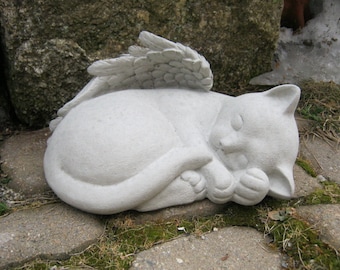
A Essay on Grave-Digging
There are all kinds of lonely.
There is the lonely of being actually alone, say on a New Year’s Eve when it is unlikely some handsome brute will burst through the door at midnight and plant a back-bending kiss on you.
There’s the peculiar state of being alone in a crowd, say a party where the only person you know is the hostess, and guests have amassed in conversation-cliques as tight as covered wagons circled against attacking Indians.
There is the lonely of waiting for a bus in the rain when you are the object of cool pity by every passing motorist, except the driver of the bus itself, who will not see you through whapping windshield wipers and great sprays of wheel water.
There is the lonely of an otherwise happy spinsterhood, content right up to the moment an old married couple passes by, walking hand-in-hand.
Then, there is the one and only true lonely
…the occasion you find yourself digging a grave for a dead cat.
Know with certainty that this is when the entire world will abandon you.
Neighbors, friends & relatives will all tell you how very sorry & upset they are to hear about the demise of poor old puss and it’s ever so nice that it will be put to rest in a lovely garden of repose.
But the day you dig that grave, a great quiet descends,
especially if it is for (by your best reckoning) a twenty pound cat.
Foot traffic ceases, phone calls stop, and the streets fall silent of passing cars. Eye-balls peek between the folds of drawn drapes appraising the best venue of escape from the premises without running into you.
Why? Because common decency demands that anyone engaged in such a piteous task be offered, at least, some empty gesture of help. But, at the same time, no one dare risk actually being taken up on it.
Yes, there are all kinds of lonely. But, the worst sort will always involve a shovel, a pick and ground harder than a frozen kitty.
 Blarney Bay